
AdSense approval requirements are the conditions a site must meet before Google will serve ads on it. The official list is short: your own original content that attracts an audience, access to the site’s source code, compliance with the AdSense Program policies, and an applicant who is at least 18 years old. Everything beyond those four points is interpretation.
That gap between the official list and what gets repeated online is the reason approval feels unpredictable. Most published checklists mix Google’s actual requirements with folklore, and then people fail the folklore and conclude the system is arbitrary. It is worth separating the two.
Google publishes its own six-part Site Approvals series covering the approval process, site ownership checks, traffic quality, content quality, navigation and what to do after a rejection. It is the closest thing to an authoritative walkthrough that exists.
What Google officially requires
From Google’s own eligibility documentation, four conditions:
- Original content you own. It has to be yours, of reasonable quality, and the kind of thing that attracts an audience. Scraped, spun or auto-generated filler does not qualify.
- Access to the source code. You must be able to reach the HTML of the site you submit, because you will need to place a verification snippet in it. A platform that does not let you edit the head section cannot be verified this way.
- Compliance with the AdSense Program policies. Google can change these at any time and the Terms place the burden of keeping up on you, not on Google.
- Applicant age of 18 or over. Younger applicants are not accepted, although a parent or guardian can apply with their own Google Account, in which case payments go to that adult.
If you use a host partner such as Blogger, you apply through that platform instead, and YouTube creators apply through YouTube Studio. Each route has its own eligibility rules.
Notice what is absent from that list. There is no minimum post count, no minimum word count, no minimum domain age and no traffic threshold.
The requirements that are not actually requirements
These appear in almost every approval guide. None of them is in Google’s eligibility documentation.
| Commonly repeated rule | Status | What is actually true |
|---|---|---|
| You need 30 posts minimum | Not official | Sites get approved with fewer and rejected with far more. Depth per page matters more than page count. |
| Every post must be 1,500+ words | Not official | Length is a proxy for usefulness, not a requirement. A short page that fully answers its query is fine. |
| Your domain must be six months old | Not official | Age is not an eligibility condition. It correlates with having real content, which is the thing being judged. |
| You need a certain amount of traffic | Not official | Google asks that content attract an audience, not that it hit a number. No threshold is published. |
| You must have a privacy policy | Best practice, effectively required | Not in the eligibility list, but required under the AdSense terms once you serve ads, and reviewers look for it. |
Treating the myths as rules is not harmful by itself. The harm is in believing you have satisfied the real requirement because you hit a word count, when the thing being assessed is whether the page is worth a reader’s time.
Why most rejections say “low value content”
This is the single most common rejection message, and it is frustrating because it describes a judgment rather than a fix.
In practice it means the reviewer could not see why a reader would choose your page over the alternatives. The usual causes:
- Content that restates what is already on page one of the search results without adding anything first-hand.
- Thin pages. A site of twelve posts at three hundred words each reads as a shell rather than a resource.
- Pages that exist to hold ads rather than to answer anything. Tag archives, empty category pages and placeholder posts all count against you.
- Content obviously generated at scale with no editing, no structure and no evidence anyone checked it.
- No clear subject. A site covering recipes, crypto and dog training looks like an ad shell, not a publication.
- Missing the basics of a real site: no About page explaining who is behind it, no contact route, no author attribution.
The fix is rarely more posts. It is usually fewer, better ones, with a clear topic and something in them that only you could have written.
Pages your site needs before you apply
None of these are in the eligibility list, but their absence is a visible signal that a site is not a real publication.
- Privacy Policy. Required under the AdSense terms once ads are running, because you disclose how advertising cookies and data are used. Write it to match what your site actually does.
- About. Who runs the site and why they are worth reading on this subject. This is where a reviewer decides whether a person is behind the site.
- Contact. A working route to reach you. A form is fine.
- Terms or Disclaimer, where relevant to your topic.
Run no ads on these pages once you are approved. They carry no value for advertisers and they are the pages a policy reviewer opens first. Where your remaining units go is a separate decision, covered in our guide to AdSense ad placement in WordPress.
The technical and policy checks worth doing first
- Navigation. A reviewer should be able to reach any section in a click or two. Broken menus and orphan pages read as an unfinished site.
- Mobile. The review is done on a real page load. A layout that breaks on a phone is a poor impression at the worst moment.
- Prohibited content. Adult material, drugs, weapons, hacking, counterfeit goods and several other categories are disallowed outright. Check your archive, not just your recent posts.
- Copyright. Stock images you have no licence for and reposted article content are both grounds for rejection.
- Traffic sources. Purchased or incentivised traffic is a policy violation and is best dealt with before you apply, not after.
- Under-construction pages. Empty categories and placeholder posts should be removed or filled before you submit.
What happens after you apply
You add a code snippet to your site, Google verifies it can find it, and then the site goes into review.
Timelines vary widely. Some applications resolve in a few days, others take several weeks, and the length of the wait does not indicate the outcome. The result arrives by email and in your AdSense account.
Leave the verification code in place for the entire review period. Removing it, even briefly, is a common self-inflicted rejection.
If you get rejected
- Read the stated reason carefully. “Low value content” and a policy violation are different problems with different fixes.
- Fix the underlying issue rather than cosmetics. Adding four thin posts to a site rejected for thin content changes nothing.
- Give the changes time to be visible. Reapplying the same day you made edits means the reviewer may see a cached version.
- Reapply when the site is genuinely different. There is no penalty for multiple applications, but repeatedly submitting an unchanged site wastes weeks.
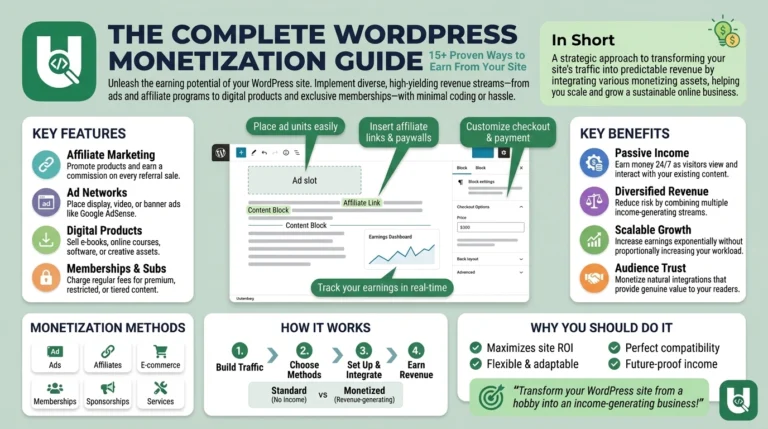
A rejection is not a ban. Sites get approved on the second or third application regularly, usually after the owner stopped adding content and started improving it. Once you are in, our WordPress monetization guide covers what else a site can earn from alongside ads.
Frequently asked questions
How many posts do I need for AdSense approval?
There is no official minimum. Google asks for original content that attracts an audience, not a specific number of posts. Sites have been approved with fewer than fifteen posts and rejected with over a hundred, because what is assessed is the usefulness of each page.
Does my domain need to be a certain age?
No. Domain age is not part of Google’s eligibility requirements. The belief persists because older sites usually have more real content, which is the thing actually being judged.
Do I need traffic before applying to AdSense?
No published threshold exists. The requirement is content that attracts an audience, which is a qualitative statement. That said, a site with no visitors at all often also lacks the content depth that passes review.
Is a privacy policy required for AdSense?
It is not listed as an eligibility requirement, but the AdSense terms require you to disclose advertising cookie and data use once ads run, so in practice you need one. Reviewers also treat its absence as a sign the site is not a real publication.
How long does AdSense approval take?
Anywhere from a few days to several weeks. The duration does not predict the result. Keep the verification code in place for the whole period.
What does “low value content” actually mean?
That the reviewer could not identify why a reader would choose your pages over existing alternatives. It usually points to thin pages, unoriginal content, or a site with no clear subject rather than to one specific error.
Can I reapply after being rejected?
Yes, as many times as needed. There is no penalty for reapplying, but submitting a site that has not meaningfully changed will produce the same result.
Can I use AdSense if I am under 18?
No. Applicants must be at least 18. A parent or guardian can apply using their own Google Account, and payments then go to that adult.